
How to Wear a Pashmina for Men: The Ultimate Guide to Stylish Draping

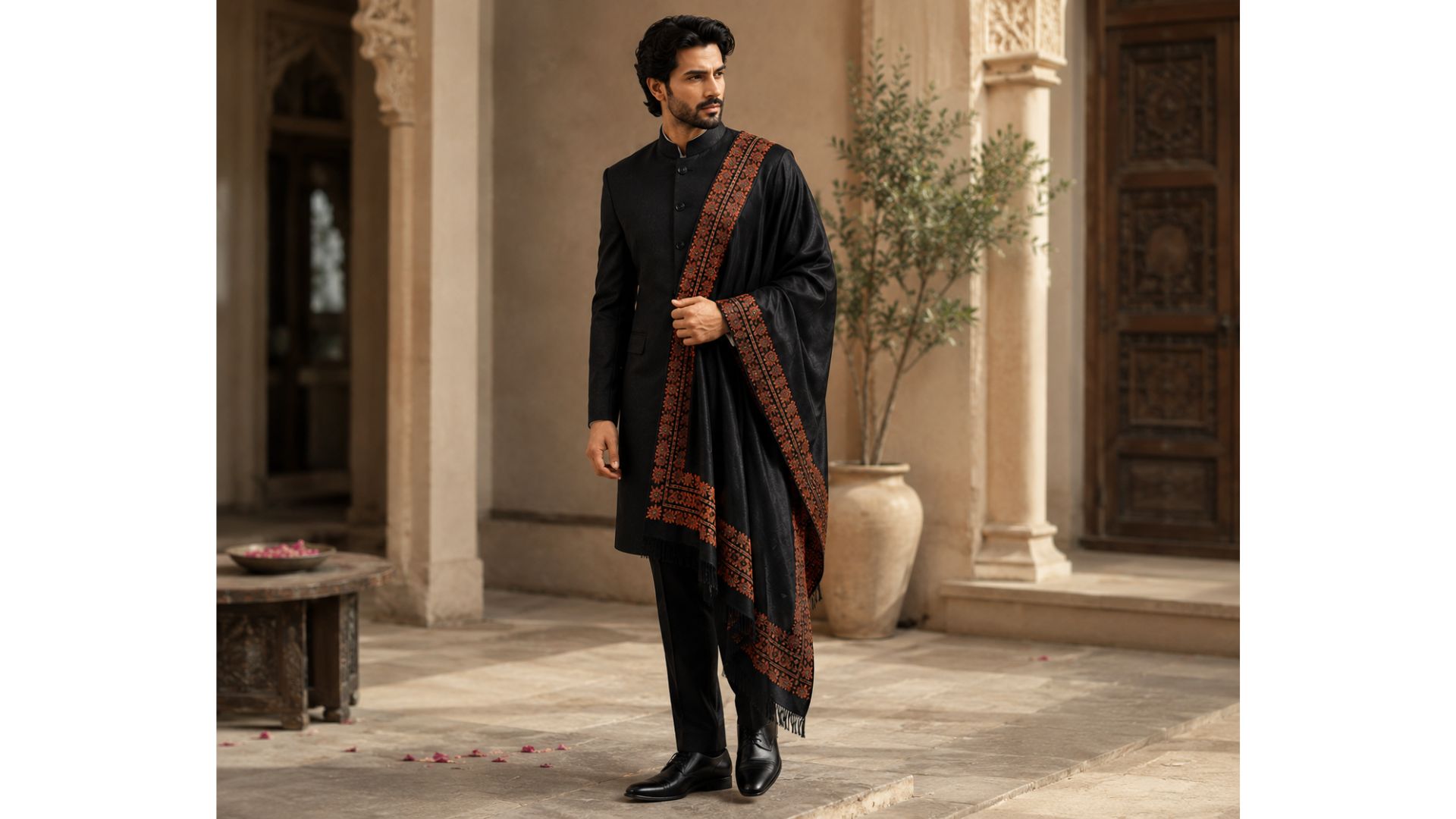
Wear a Pashmina for Men: While you likely turn to a standard scarf for utility and warmth, the pashmina offers an elevated alternative. A well-executed drape introduces texture, thermal comfort, and a layer of sartorial sophistication without overcomplicating your silhouette. This guide explores seven refined techniques for men to master the pashmina, paired with practical styling advice for any ensemble.
Key Takeaways
- Pashmina is a lightweight, soft, and warm luxury textile that works as a versatile scarf or wrap.
- Simple drapes such as the classic drape, loop, and one-shoulder style are easy starting points for men.
- Neutral colors such as charcoal, navy, beige, camel, black, and grey pair easily with men’s wardrobes.
- The right draping technique depends on your outfit, weather, occasion, and desired level of warmth.
- Clean, relaxed drapes generally create a more refined appearance than bulky knots or excessive layers.
- Pashmina works across occasions, including casual outings, travel, office wear, weddings, dinners, and traditional events.
- Experimenting with different drapes helps you develop a pashmina style that fits your personal wardrobe.
Table of Contents
What Is Pashmina, and How Is It Different From a Regular Scarf?
Pashmina is a premium, lightweight textile celebrated for its unparalleled softness and warmth, deeply rooted in Himalayan craftsmanship. Genuine Kashmir Pashmina is protected as a Geographical Indication (GI) in India and is traditionally produced in the Jammu and Kashmir region. — Source: Intellectual Property India, 2025
Distinguished from common winter woolens, a pashmina’s allure lies in its fine micron count, airy weight, and graceful movement. Its lack of bulk allows it to layer seamlessly over a tailored shirt or blazer, providing insulation without the cumbersome feel of a heavy knit.
For men exploring [types of pashmina], the key point is to look beyond appearance and consider fiber quality, construction, texture, size, and authenticity. A genuine high-quality piece should feel comfortable against the skin and drape naturally rather than appearing stiff.
The Art of the Drape: Why Styling Matters
Pashmina for Men, the choice of drape is critical, as it dictates the balance, proportion, and perceived formality of the look. A fluid shoulder drape conveys relaxed elegance for a blazer, whereas a precise neck wrap offers functional insulation for an overcoat.
Additionally, pashmina gives a men’s outfit another layer of visual texture without requiring bold patterns or complicated accessories. A charcoal pashmina over a navy coat, for instance, creates contrast while keeping the overall appearance understated.
Pashmina is also versatile enough for both contemporary and traditional clothing. Men can wear a pashmina by draping it over the shoulders, looping it around the neck, or using a simple one-sided drape depending on the outfit and occasion.
How Should Men Wear a Pashmina Scarf?
Men should wear a pashmina according to the outfit, occasion, weather, and amount of warmth needed rather than following one fixed wrapping method. The following seven styles cover most everyday and formal situations.
1. The Classic Drape
The most effortless technique, the classic drape requires neither folds nor knots, letting the quality of the fabric speak for itself.
First, place the pashmina evenly around the back of your neck. Second, let both ends fall naturally over the front of your shoulders. Finally, adjust the ends so they sit at approximately the same length.
This style works particularly well with blazers, suits, overcoats, and traditional kurtas. For example, a beige pashmina over a dark navy blazer creates a polished formal look without adding unnecessary volume.
2. Simple Loop
The simple loop provides more warmth while remaining clean and understated.
First, fold the pashmina in half lengthwise. Next, place the folded scarf around your neck with the loop on one side. Then, pull the loose ends through the loop and adjust the tension.
This method works well for casual winter outfits, including sweaters, denim jackets, wool coats, and shirts. It is also a practical introduction to [how to wrap a pashmina scarf] without complicated knots.
3. Parisian Loop
The Parisian loop creates a structured appearance and keeps the scarf closer to the neck.
First, fold the pashmina in half. Then, place it around your neck and pull both loose ends through the folded loop. Finally, loosen the front slightly so the fabric does not appear too tight.
This style suits smart-casual outfits and winter coats. A grey pashmina with a black coat and white shirt, for example, creates a balanced monochromatic combination.
4. The Asymmetric One-Shoulder
This style offers a more modern, directional aesthetic by introducing intentional asymmetry.
First, place the pashmina around your neck with one end noticeably longer. Next, throw the longer end over the opposite shoulder. Leave the shorter end hanging naturally at the front.
This method works especially well with long coats, ethnic jackets, kurtas, and relaxed evening outfits. The asymmetry adds visual interest without requiring a bulky knot.
5. Neck Wrap
The neck wrap is ideal when warmth is more important than creating a formal appearance.
First, place the pashmina around your neck. Next, wrap both ends around once or twice depending on the length and weather. Finally, tuck or loosely position the ends at the front.
This style works best with winter coats, sweaters, and travel outfits. Avoid wrapping too tightly because pashmina looks more refined when it retains some natural softness.
6. Relaxed Shoulder Drape
The relaxed shoulder drape is particularly effective for formal or traditional clothing.
First, spread the pashmina across your shoulders. Next, allow both sides to fall naturally toward the front. Finally, adjust the fabric so it frames the upper body without covering the entire outfit.
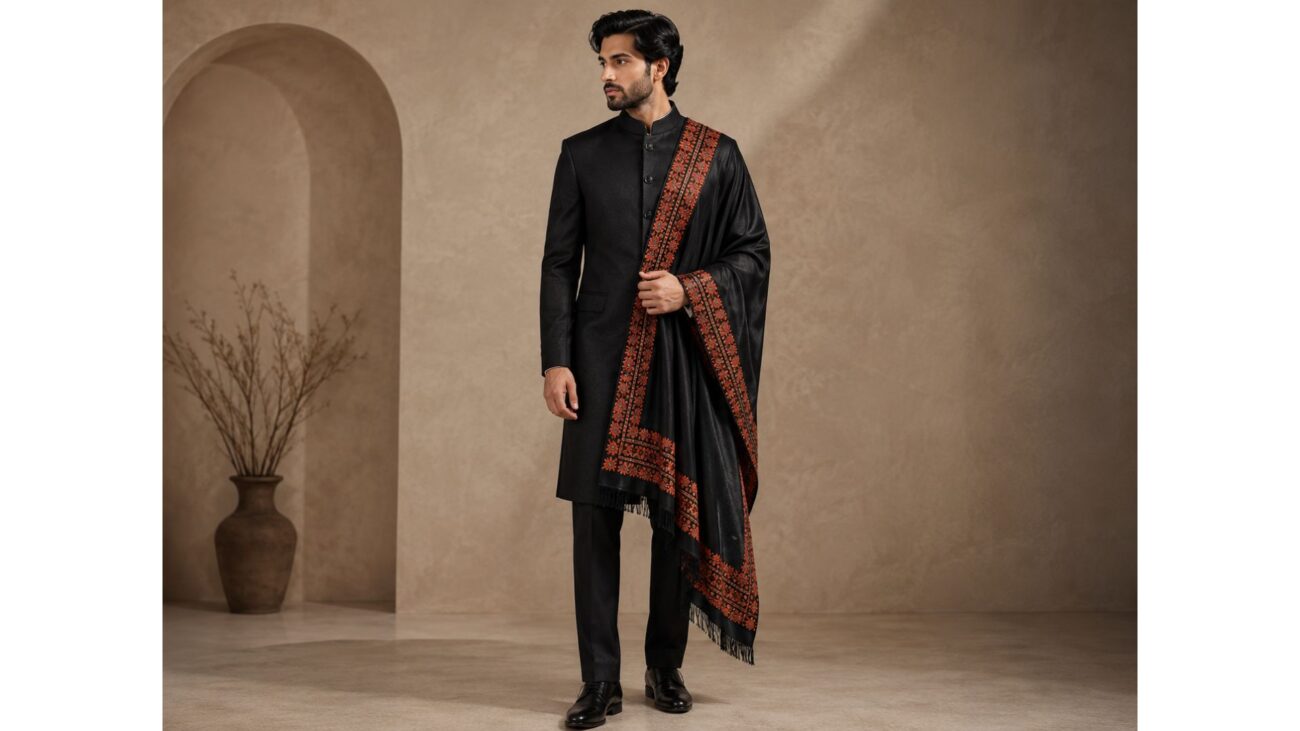
This style works with sherwanis, kurtas, Nehru jackets, and formal ethnic wear. A cream or ivory pashmina can complement a darker sherwani while maintaining a sophisticated contrast.
7. Traditional Drape
The traditional drape emphasizes the pashmina as a wrap rather than simply a neck accessory.
First, spread the pashmina fully across your shoulders. Next, bring one side across the body and allow the other side to fall naturally. Finally, make small adjustments around the shoulders so the fabric sits comfortably.
This approach is particularly suitable for weddings, festive gatherings, cultural events, and colder formal occasions. For more inspiration, explore before choosing your preferred look.
What Is the Best Way to Wear a Pashmina for Men?
The best way to wear a pashmina for men is a simple drape that complements the outfit without creating unnecessary bulk. For example, a classic shoulder drape works well with a blazer, while a simple loop provides more warmth with a winter coat.
| Outfit | Recommended Pashmina Style | Suitable Colors |
| Shirt + trousers | Classic drape | Grey, beige, navy |
| Sweater + jeans | Simple loop | Charcoal, camel |
| Winter coat | Parisian loop | Black, grey, navy |
| Blazer or suit | Shoulder drape | Beige, charcoal |
| Kurta | One-shoulder or traditional | Cream, brown, deep blue |
| Sherwani | Traditional drape | Ivory, beige, complementary tones |
Moreover, [how to style a pashmina] becomes easier when you first decide whether your priority is warmth, formality, or visual texture. Choosing one priority prevents the scarf from competing with the rest of your outfit.
Can Men Wear Pashmina With a Suit or Blazer?
Men can wear pashmina with a suit or blazer by choosing a slim, relaxed drape that complements the tailoring. For example, a charcoal pashmina over a navy blazer can add texture while preserving the clean lines of the jacket.
First, use a classic shoulder drape for a sophisticated appearance. Alternatively, place the pashmina loosely around the neck when traveling between formal locations.
For formal styling, pashmina with a suit works best when the scarf does not overpower the lapels. A pashmina should complement formal tailoring rather than become the main visual focus.
How Do You Wear a Pashmina With a Coat?
Men can wear a pashmina with a coat by using a simple loop, a Parisian loop, or a relaxed neck wrap. For example, a camel pashmina works naturally with a charcoal coat, while a navy pashmina can complement a grey overcoat.
Additionally, avoid creating too many layers under a fitted coat. A thinner pashmina with one controlled wrap usually provides warmth while allowing the coat to retain its intended silhouette.
Can Men Wear Pashmina With a Kurta?
Men can wear pashmina with a kurta by using a shoulder, one-sided, or traditional drape. For example, a cream pashmina over a dark kurta creates an elegant contrast suitable for festive gatherings.
Moreover, traditional clothing gives you more freedom to use the pashmina as a visible layer. A patterned pashmina can work with a simple kurta, while a plain pashmina is safer when the kurta already contains embroidery or strong detailing.
The key is coordination rather than strict matching. Your pashmina and kurta should complement each other without looking identical.
What Pashmina Colors Work Best for Men?
The best pashmina colors for men are charcoal, navy, beige, camel, black, grey, cream, and other understated shades because they work across multiple outfits.
For example, a charcoal pashmina can pair with black, navy, grey, or white clothing, making it useful as a first purchase. A camel pashmina works particularly well with navy, brown, cream, and dark green.
| Color | Best With | Style |
| Charcoal | Black, navy, white | Versatile |
| Navy | Grey, beige, white | Refined |
| Camel | Brown, navy, cream | Warm |
| Black | Grey, white, charcoal | Minimal |
| Beige | Navy, brown, black | Classic |
| Cream | Brown, black, ethnic wear | Traditional |
Before choosing, consider [best pashmina colors] for your existing wardrobe rather than selecting a shade based only on current trends.
How Do You Choose the Right Pashmina for Men’s Outfits?
The right pashmina for men’s outfits depends on quality, size, color, texture, pattern, and season. First, choose a neutral color if you want one scarf that works across multiple outfits.
Second, consider the size and thickness. A lightweight piece is easier to style with formal clothing, while a larger wrap can provide greater coverage during colder weather.
Third, pay attention to construction and sourcing. Kashmir Pashmina is a registered GI, while other Pashmina-related products also have distinct geographical registrations, including Pashmina Wool of Ladakh. — Source: [Intellectual Property India, 2023–2025]
Finally, choose patterns according to your wardrobe. A plain pashmina offers the greatest versatility, while a patterned piece can become a statement accessory.
What Are the Common Mistakes Men Make When Wearing Pashmina?
Common pashmina styling mistakes include excessive wrapping, bulky knots, poor color coordination, incorrect proportions, and unnecessarily complicated draping.
First, avoid wrapping a lightweight pashmina repeatedly until it becomes bulky. For example, one or two controlled wraps are usually enough for a coat.
Second, avoid pairing a highly patterned pashmina with several other bold elements. Third, make sure the scarf length suits your height and clothing silhouette.
A clean, relaxed drape usually creates a more refined men’s look than bulky knots or excessive layers.
Is Pashmina Suitable for Everyday Wear for Men?
Pashmina is suitable for everyday wear for men when the fabric, color, and draping style match the setting. For example, a neutral pashmina with a sweater and trousers can work for a casual winter day, while a shoulder drape suits a dinner or formal event.
Moreover, pashmina is particularly useful for travel because one lightweight accessory can work with several outfits. You can also rotate between a loop, shoulder drape, and one-sided style to create different looks from the same piece.
How Should Men Wear Pashmina for a Formal Occasion?
Men should wear pashmina for a formal occasion using a restrained shoulder drape or elegant one-sided drape. For example, a plain cream pashmina can complement a dark sherwani without competing with its embroidery.
For suits and blazers, keep the styling minimal and coordinated with the overall color palette. For weddings and festive events, you can choose richer tones or subtle patterns when the rest of the outfit is relatively simple.
How Should Men Style Pashmina for a Casual Outfit?
Men should style pashmina for casual outfits using simple loops, relaxed wraps, or one-shoulder drapes. For example, combine a charcoal pashmina with a crew-neck sweater, dark jeans, and boots for an easy winter look.
Additionally, casual styling does not require perfect symmetry. A slightly relaxed drape can make the outfit feel natural rather than overly formal.
What Tools Can Help You Practice Pashmina Styling?
Visual references are useful when learning pashmina styling because draping is easier to understand when you can see the position of each fold and end
A useful custom illustration should show the starting position, hand movement, final drape, and recommended outfit for each method. You can also compare your preferred technique with a broader, guide before practicing.
What’s Next for Building a Versatile Men’s Pashmina Wardrobe?
Building a versatile men’s pashmina wardrobe starts with one high-quality neutral piece and several simple draping techniques. Begin with charcoal, navy, beige, camel, or grey because these colors can complement a wide range of clothing.
Next, practice three styles: the classic drape for formal outfits, the simple loop for everyday wear, and the traditional drape for ethnic clothing. Once these feel natural, experiment with patterns and richer colors.
Finally, learn how to choose a pashmina and how to care for a pashmina so your investment remains useful for years. A versatile pashmina wardrobe is built through thoughtful selection, not through owning a large number of scarves.
Conclusion: How to Make Pashmina Part of Your Personal Style
The pashmina transcends utility when the color, weight, and draping method are curated to enhance the outfit rather than overshadow it. Whether opting for a simple loop with a sweater or a traditional wrap for a formal event, this accessory remains a cornerstone of a refined wardrobe.
Ultimately, the best men’s pashmina styling is comfortable, intentional, and easy to maintain. Start with a neutral piece, practice a few [pashmina draping styles], and gradually experiment with different outfits and occasions.
You do not need complicated knots to wear a pashmina well. A clean drape and thoughtful color choice are often enough to create a polished look.
Written by Crafted Pahad Editorial Team — Himalayan fashion and textile content specialists
Reviewed by Pashmina & Textile Editor — specialist in luxury-fiber and styling content