
The Ultimate Guide on How to Wear a Pashmina Indian Style: Elegant Drapes for Every Occasion

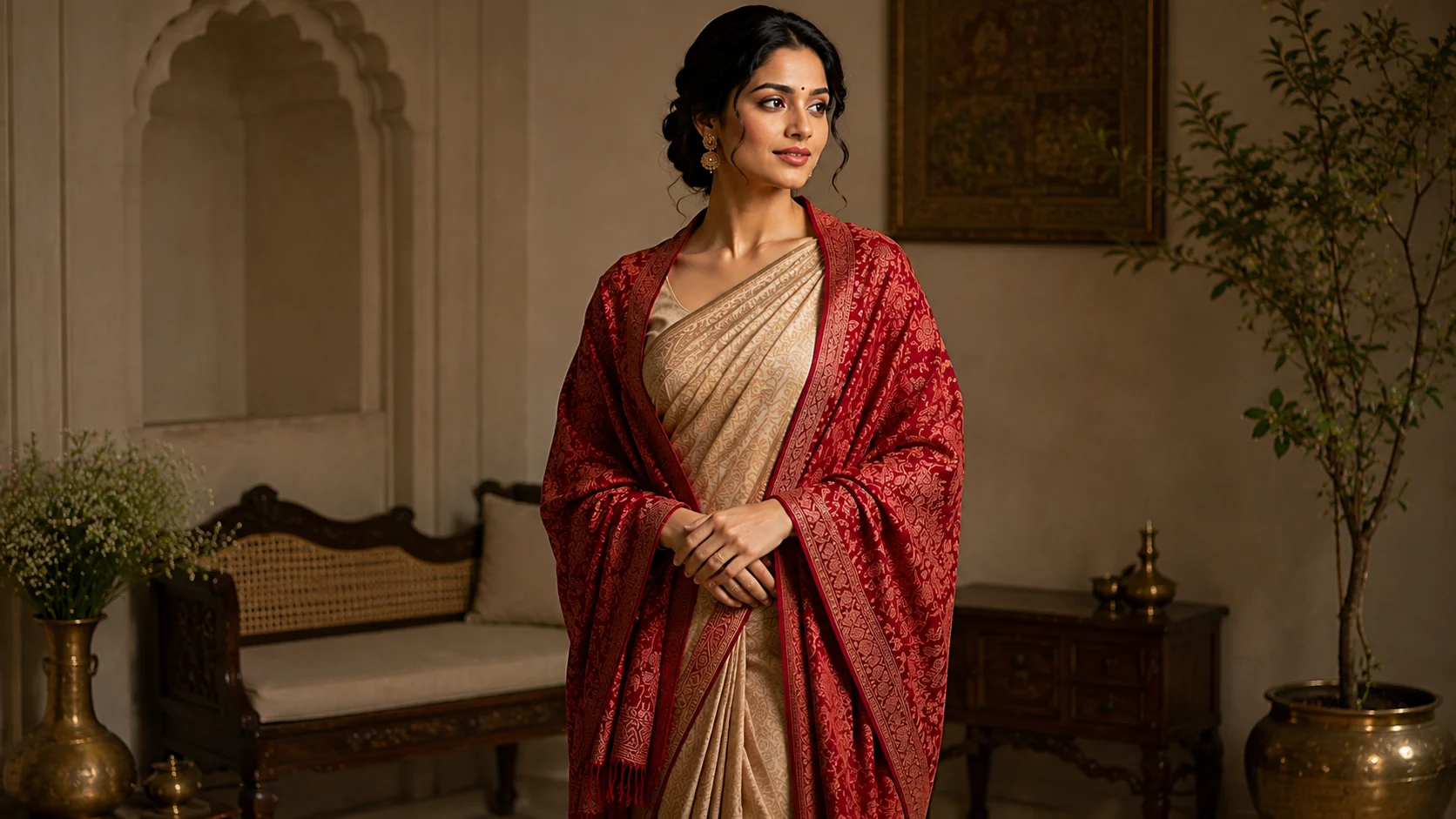
How to Wear a Pashmina: If you already love the timeless elegance of a pashmina, you may naturally drape it over your shoulders with a kurta, saree, or festive outfit. But the right Indian-style drape can completely change how it frames your outfit and silhouette. In this guide, you’ll learn simple Pashmina draping styles, outfit combinations, and occasion-specific ways to wear it with an effortlessly elegant Indian look.
Key Takeaways
- Indian-style Pashmina draping combines traditional shawl styling with contemporary ways to complement Indian and Indo-Western outfits.
- Classic shoulder, front-wrap, saree-style, and one-shoulder drapes create different silhouettes for different occasions.
- Pashmina pairs naturally with sarees, kurtas, salwar suits, lehengas, dresses, and long skirts.
- Outfit, occasion, neckline, size, and fabric weight determine which Pashmina drape works best.
- Minimal pins or brooches can secure a Pashmina while preserving its natural flow.
- Neutral shades offer everyday versatility, while jewel tones and traditional patterns create stronger festive looks.
- Starting with one simple drape makes it easier to experiment with more elaborate Indian-style Pashmina looks.
What Is Indian-Style Pashmina Draping?
Indian-style Pashmina draping is the practice of wearing a Pashmina shawl using traditional or contemporary Indian draping techniques that complement outfits such as sarees, kurtas, salwar suits, and lehengas.
Moreover, “pashmina” refers to an exceptionally fine cashmere-type fiber associated with the downy winter fleece of mountain goats, including the Changthangi goat. Government sources describe pashmina fibers as exceptionally fine, with commonly cited measurements around 12–16 microns. — Source: [Government of India, 2021–2026]
For example, a lightweight Pashmina can be loosely placed over a silk saree for an evening event, while a larger shawl can be wrapped around a kurta for additional warmth during winter.
Why Does Indian-Style Pashmina Draping Matter?
Indian-style Pashmina draping matters because the right drape adds warmth, structure, and elegance without overpowering the outfit.
First, the drape determines how the Pashmina interacts with your clothing. A loose shoulder drape creates an effortless silhouette, while a structured one-shoulder style looks more formal.
Moreover, Pashmina’s lightweight nature makes it particularly useful when you want warmth without excessive visual bulk. Government information on Pashmina highlights its fine fibre and warmth, making it suitable for cold-weather apparel. — Source: [Press Information Bureau, Government of India, 2019]
For example, pairing a cream Pashmina with a jewel-toned kurta creates contrast while keeping the overall outfit refined.
How Do You Drape a Pashmina Shawl in Indian Style?
A pashmina can be worn in Indian style by draping it over one or both shoulders, wrapping it around the upper body, or arranging it in a saree-inspired style depending on the outfit and occasion.
How Do You Style a Pashmina With a Kurta?
A classic shoulder drape is one of the easiest ways to style a Pashmina with a kurta or salwar suit.
First, open the Pashmina fully and place its center across the back of your shoulders. Next, let both ends fall naturally toward the front, keeping the fabric relatively flat.
Then, adjust one side slightly longer than the other for an effortless Indian silhouette. For a more polished appearance, secure one shoulder with a small brooch.
For example, pair a beige Pashmina with a straight white kurta, cigarette pants, juttis, and delicate earrings.
How Do You Wear a Pashmina in a Front-Wrap Drape?
A front-wrap Pashmina drape creates a practical, cozy look for everyday ethnic outfits.
First, place the Pashmina around the back of your neck and bring both ends toward the front. Cross the ends loosely over your chest, then let them fall naturally or tuck one end beneath the opposite side.
Moreover, avoid pulling the fabric too tightly because a relaxed wrap allows the soft material to retain its graceful movement.
For example, try this style with a cotton kurta, palazzo pants, ankle boots, and a structured handbag during winter.
How Do You Wear a Pashmina With a Saree?
A saree-style Pashmina drape works best when the shawl complements rather than competes with the saree.
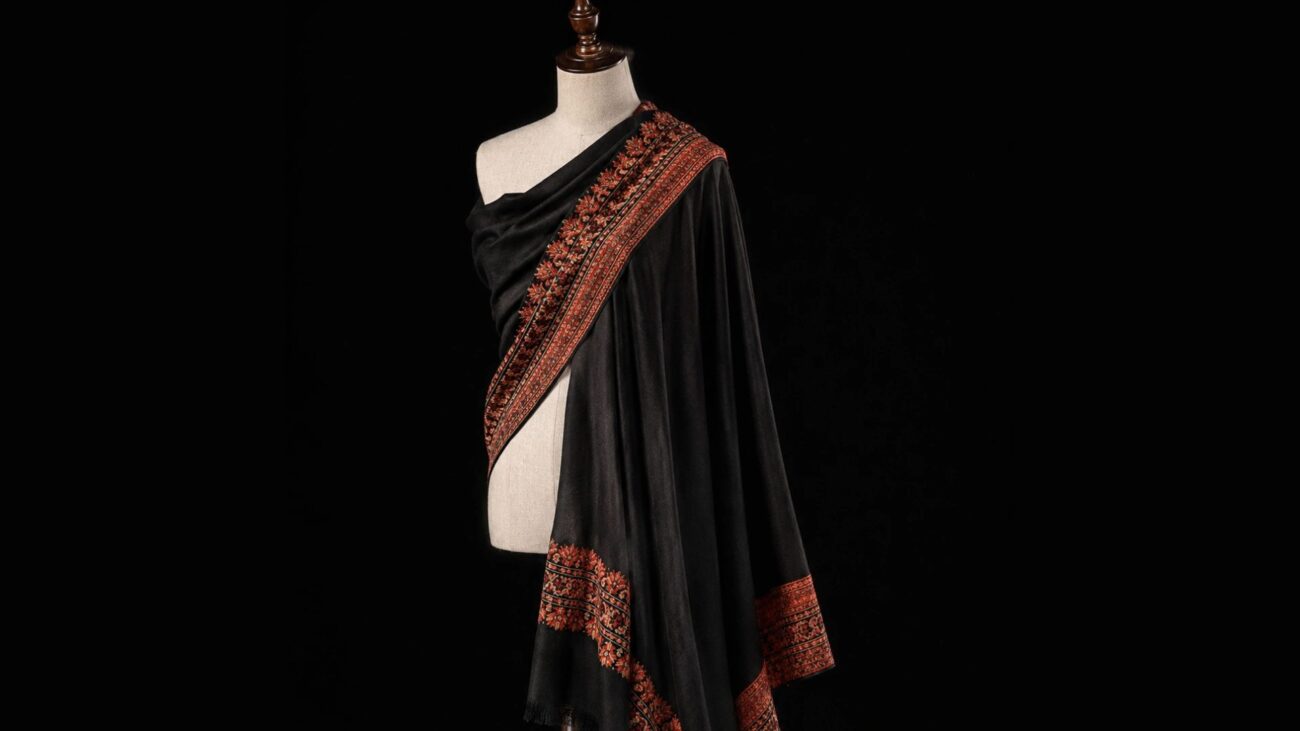
First, fold the Pashmina lengthwise if it feels too wide. Place it across your back and bring one end over your shoulder, similar to a saree pallu.
Next, allow the opposite end to fall toward the front and adjust the folds around your waist. A discreet pin can hold the shoulder section in place.
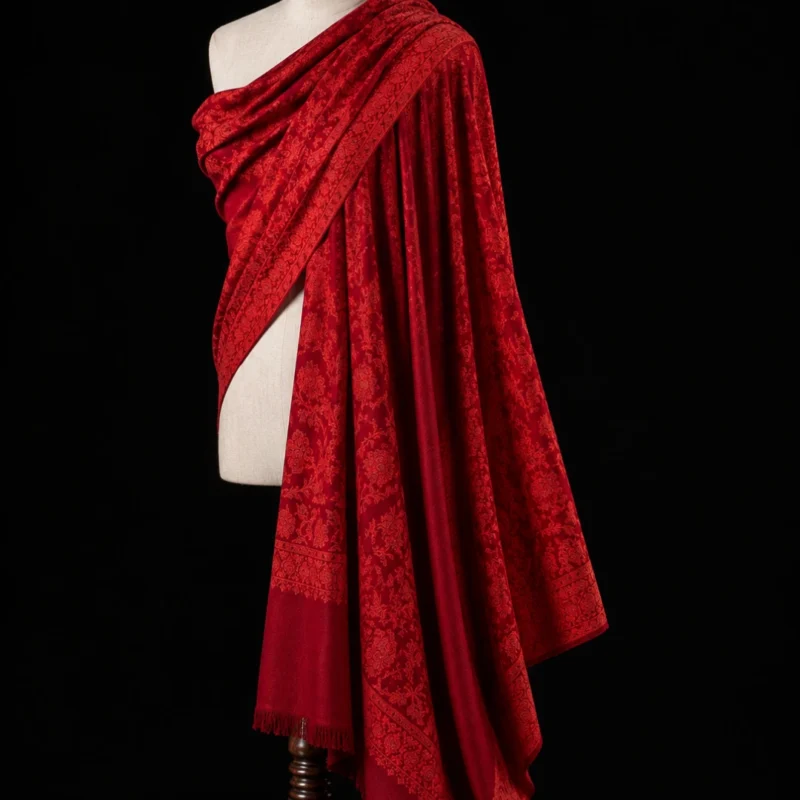
For example, a burgundy Pashmina can add warmth and depth to an ivory silk saree during a winter wedding.
[Internal link: “how to style a Pashmina with a saree” → suggested target page/topic]
What Is the Best Pashmina Drape for a Wedding?
A one-shoulder Pashmina drape is an elegant choice for weddings and formal Indian occasions.
First, place the Pashmina across your back with one end longer than the other. Bring the longer end over one shoulder and allow it to fall toward the front.
Then, use a small brooch near the shoulder if additional security is needed. Keep the rest of the fabric loose so the Pashmina frames the outfit instead of covering it.
For example, style a champagne or deep emerald Pashmina with a lehenga, embroidered blouse, statement earrings, and embellished footwear.
How Do You Wear a Pashmina With a Lehenga?
Pashmina with a lehenga creates a graceful winter wedding look when the shawl is draped lightly around the shoulders.
First, choose a Pashmina that complements either the blouse or one major color in the lehenga. Next, place it over both shoulders and let the ends fall evenly.
Alternatively, carry one end across the front and secure it lightly at the opposite shoulder. This creates definition while leaving the embroidery visible.
For example, a soft blush Pashmina works beautifully with pastel bridalwear, while burgundy, navy, or emerald can complement richer festive colors.
Can You Wear a Pashmina With Indo-Western Outfits?
Pashmina works with Indo-Western outfits because its traditional character balances modern clothing such as jeans, dresses, and long skirts.
First, keep the drape simple when the outfit already has strong details. A loose shoulder or front-wrap style usually works better than an elaborate drape with contemporary clothing.
For example, combine a charcoal Pashmina with straight-leg jeans, a fitted top, ankle boots, and minimal jewelry.
What Are the Best Pashmina Styles for Different Occasions?
The best Pashmina style depends on the occasion, outfit structure, weather, and level of formality.
| Occasion | Recommended Drape | Outfit Pairing | Color Direction |
| Wedding | One-shoulder | Lehenga or saree | Emerald, wine, champagne |
| Festival | Double-shoulder | Anarkali or salwar suit | Maroon, mustard, teal |
| Office | Classic shoulder | Straight kurta | Beige, grey, navy |
| Casual outing | Front-wrap | Kurta or jeans | Cream, camel, charcoal |
| Winter travel | Front-wrap | Sweater and trousers | Neutral or earthy tones |
| Evening event | Saree-style | Silk saree | Deep jewel tones |
Moreover, traditional Kashmiri shawls are closely associated with intricate craftsmanship and distinctive motifs. Kani shawls, for example, have a long weaving heritage and feature designs ranging from borders and butis to elaborate all-over patterns. — Source: [Incredible India, Government of India]
What Tools Help You Wear a Pashmina Securely?
A mirror, discreet shawl pin, or small brooch can make Pashmina styling easier while keeping the drape natural.
First, use a full-length mirror to check whether both sides fall evenly. Next, use only one or two discreet pins when necessary rather than securing multiple points.
For example, a small brooch at the shoulder can prevent slipping during a wedding without flattening the entire shawl.
Moreover, avoid excessive folding because too many layers can make even a lightweight Pashmina appear bulky.
How Do You Choose the Right Pashmina for Traditional Indian Styling?
The right Pashmina for Indian styling should match your outfit, occasion, preferred drape, and desired level of warmth.
First, consider the size. A larger shawl provides more coverage for traditional draping, while a smaller stole is easier to style casually.
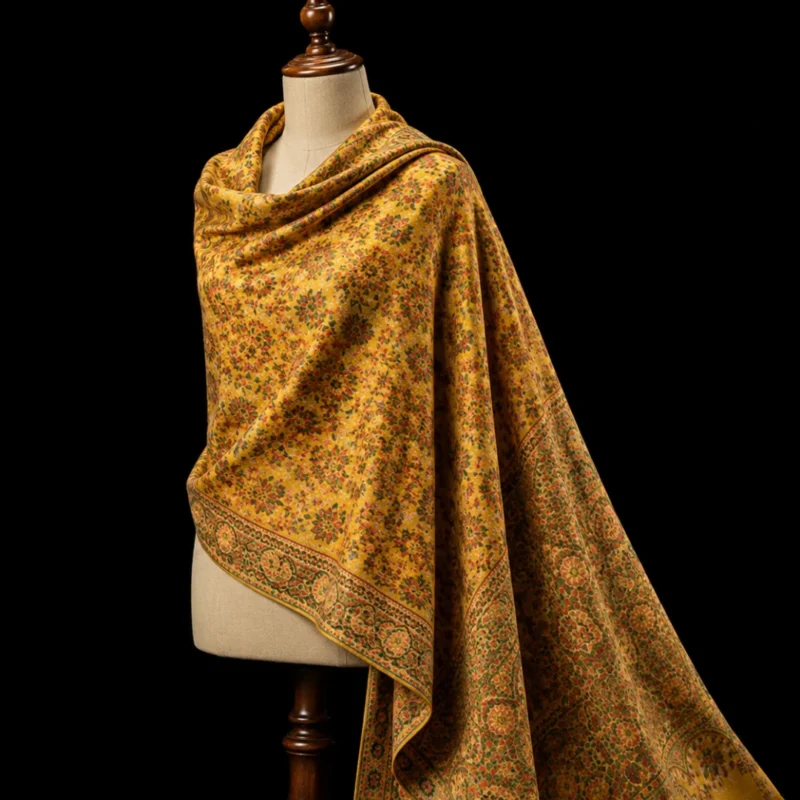
Second, consider the color and pattern. Neutral shades such as cream, beige, grey, and black are versatile, while jewel tones and intricate motifs work particularly well for festive dressing.
Third, consider authenticity when purchasing. India’s Pashmina certification initiatives were introduced partly to address adulteration and help buyers identify certified products.
For example, the Wildlife Institute of India describes a certification system using testing and traceable identification for certified Pashmina products.
What’s Next? Practice These Pashmina Drapes One at a Time
First, begin with the classic shoulder drape and practice adjusting the length on both sides. Next, try the front-wrap style with a kurta or casual outfit.
Then, experiment with the one-shoulder and saree-style drapes when you feel comfortable handling the fabric. This gradual approach helps you understand how your Pashmina moves with different outfits.
Conclusion
Pashmina can become a versatile part of an Indian wardrobe when you choose the drape according to your outfit and occasion.
A simple shoulder drape can effortlessly elevate everyday ethnic wear, while saree-style and one-shoulder drapes offer a polished, sophisticated look for weddings. A Pashmina also transitions beautifully into Indo-Western outfits, making it a versatile staple for any occasion.
Focus on natural movement, minimal pinning, and balanced proportions to let the fabric shine, rather than getting caught up in complicated folds. Start with one style, practice it, and gradually discover the Indian Pashmina drape that feels most authentically you.
Written by Crafted Pahad Editorial Team—Fashion and Himalayan textile content specialists
Reviewed by Crafted Pahad Editorial Team—Traditional Indian fashion and Pashmina styling review team