Kashmiri Pashmina: The Complete Guide to Identifying Authentic

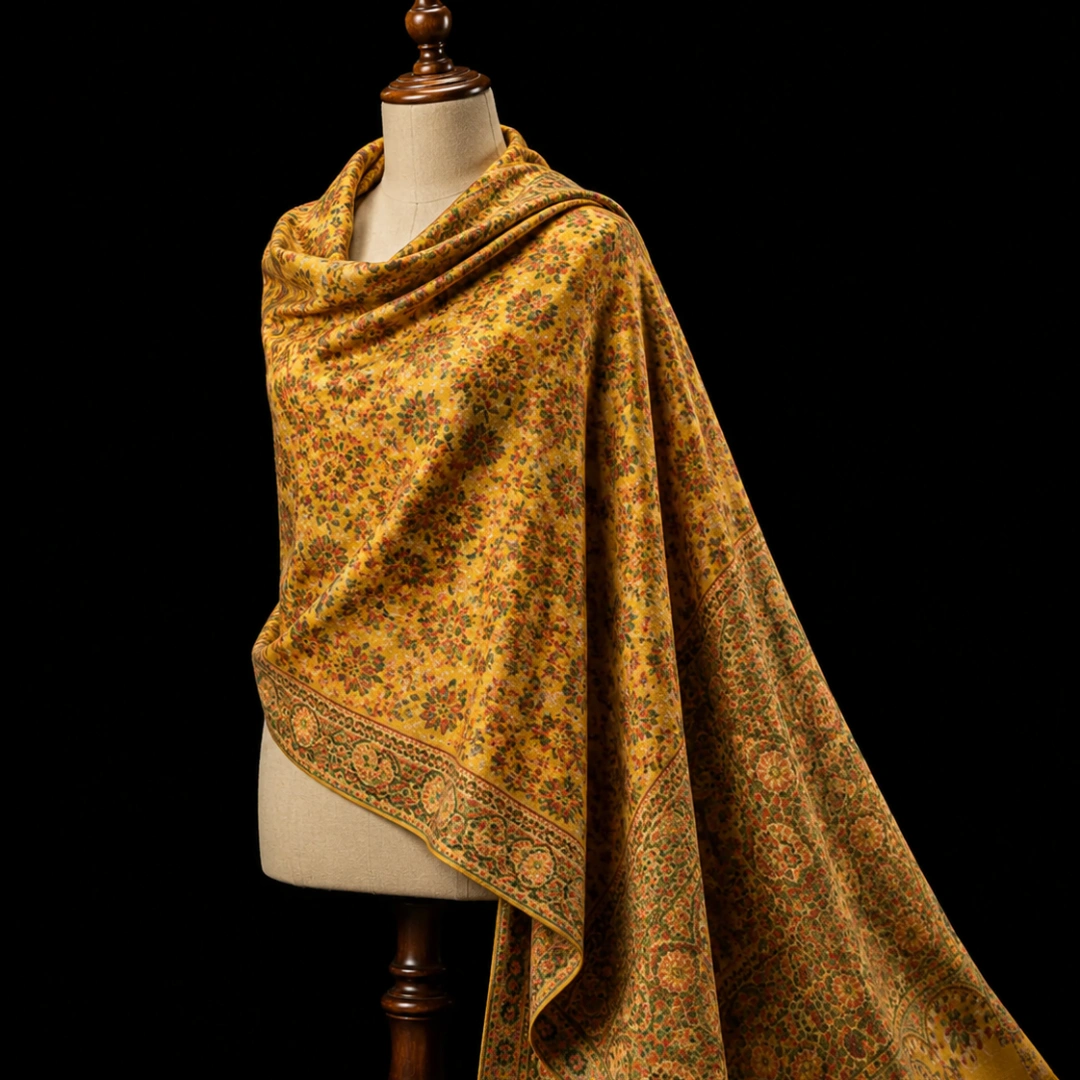
Walk into any market, and you will find dozens of shawls labeled “pashmina.” Many are soft, colorful, and cheap. Very few are the real thing. A large share are viscose, acrylic, or nylon blends dressed up with a famous name.
Genuine Kashmiri pashmina is a luxury craft product, woven over weeks by skilled artisans. If you are paying for it, you deserve to know what you are getting. This guide walks you through the look, the feel, simple home tests, certifications, and red flags so that you can buy with confidence.
What Is Authentic Kashmiri Pashmina?
Real pashmina comes from the fine undercoat of the Changthangi goat, raised on Ladakh’s high-altitude Changthang plateau. To survive freezing winters, these goats grow an exceptionally soft inner layer, which is gently combed out each spring.
The fiber is remarkably fine, roughly 12 to 16 microns in diameter. For comparison, a human hair measures about 50 to 70 microns. That fineness is what makes pashmina so light, warm, and soft.
Traditionally, Kashmir artisans hand-spin, hand-weave, and often hand-finish the fiber. One thing worth clarifying: “pashmina” is not a generic word for any soft scarf. It is also not identical to cashmere, though the two are related goat fibers.

Physical Signs of the Real Thing
1. The feel
Genuine pashmina feels soft, warm, and lightweight. It should never feel slippery, waxy, or plasticky. Hold it against your skin for a moment: real pashmina warms up quickly.
2. The look
Look for a gentle, natural, slightly matte finish. A glossy sheen usually points to viscose or silk blends. Colors in real pashmina look rich but soft, never neon or harsh. To see how color depth looks on authentic fiber, compare the tones of our black, red, and mustard pashmina shawls.
3. The weave
Hand-woven pieces show tiny irregularities. These are signs of craftsmanship, not defects. Look closely at the twill or herringbone pattern: it should be consistent, but not perfectly machine-uniform.
4. The edges and fringe
Hand-twisted fringes are slightly uneven and tightly knotted. Machine-made fringes tend to be perfectly uniform and are often glued or stitched.
5. Weight and drape
A real pashmina falls softly, gathers easily, and folds down small. If a shawl feels heavy, stiff, or bulky, be cautious.
Simple Tests You Can Try at Home
No home test can confirm fiber content precisely, but these checks help you spot obvious fakes.
| Test | What to expect with real pashmina | Caution |
|---|---|---|
| Rub test | Gentle friction creates slight warmth, with no static or squeaking | Not conclusive alone |
| Burn test | Burns slowly, smells like burnt hair, leaves soft ash that crumbles | Synthetics melt into a hard bead and smell like plastic |
| Pull a thread | The thread is fine, slightly fuzzy, and breaks easily | Don’t damage a shawl you plan to wear |
| Ring test | Fine shawls may pass through a ring | Unreliable: many fakes pass too |
Safety tip: For the burn test, use only a single loose thread, hold it with tweezers, and keep it well away from the shawl and any flammable items.
An honest note on the ring test: you will often hear that a real pashmina can slide through a ring. Treat this as folklore. Thin synthetic scarves pass too, and thick hand-woven pashmina may not.
The most reliable proof is not a home trick. It is lab testing and certification.
Certifications, Labels, and Marks
- GI (Geographical Indication) tag: Kashmir Pashmina holds GI status, which certifies its origin and traditional craft process.
- Lab testing: Look for shawls tested by recognized testing centers in Srinagar that verify fiber content and fineness.
- Handicraft marks: Where available, these indicate handmade origin.
- Verify, don’t just trust: Ask for the certificate number or QR code and check that it matches the product you are holding.
Warning: labels can be forged. A tag alone is not proof, so buy from reputable sellers who can explain their sourcing.
Pashmina vs. Look-Alikes
Pashmina vs. cashmere: Both are goat fibers. Pashmina is traditionally finer and more often hand-processed, while cashmere is a broader term for fiber from several goat breeds.
Pashmina vs. “pashmina-style” blends: Many shawls sold as pashmina are blends of viscose, silk, or wool. They can be pleasant to wear, but they are not pure pashmina.
Pashmina vs. machine-made: A machine-made shawl can use real pashmina fiber, but it lacks the hand-spun quality and uneven charm of artisan work, and it is usually priced lower.
Blends are not automatically “fake.” The real problem is dishonest labeling. A good seller will tell you exactly what you are buying.
Red Flags When Buying
- Prices that seem too good to be true. Genuine hand-woven pashmina takes weeks of skilled work.
- A seller who can’t explain the origin, fiber, or process.
- No certification, or only a vague “100% pashmina” tag.
- Shiny, stiff, or slippery fabric.
- A strong chemical smell or heavy static.
Where and How to Buy
Buy from government-recognized emporiums, established Kashmiri artisans, and trusted brands. Ask about the weaver, the certification, and the return policy.
Online, look for clear photographs, detailed fiber and origin descriptions, and verifiable reviews. If you are exploring options, you can start with our black pashmina shawl for a timeless staple, our red pashmina shawl for a bold statement, or our mustard pashmina shawl for a warm, earthy tone.
Caring for Your Pashmina
Proper care helps a real pashmina last for generations.
- Dry clean, or hand wash gently in cool water with a mild shampoo.
- Never wring or tumble dry.
- Store folded with natural repellents like cedar rather than mothballs.
Once your shawl is safe and clean, the fun part begins. Our guides on how to wear a pashmina and how to wear a pashmina for men cover draping and styling ideas for every occasion.
Frequently Asked Questions
Q1. Is pashmina the same as cashmere? Both come from goats, but pashmina refers specifically to the fine undercoat of Changthangi goats from the Himalayan region and traditionally involves hand-spinning and weaving. Cashmere is a broader term.
Q2. How can I tell if a pashmina is real without a lab test? Check the feel, weave irregularities, fringe, and labels, and consider a single-thread burn test. No home test is 100% reliable, so certification is the best proof.
Q3. Why are real pashmina shawls expensive? Each goat yields only a small amount of fiber per year, and combing, spinning, weaving, and finishing are slow, skilled processes.
Q4. Can a pashmina be machine-made and still genuine? Yes. The fiber can be genuine, but machine-made shawls differ from hand-woven ones in texture, uniformity, and price.
Q5. Does a shawl passing through a ring prove it’s pashmina? No. This is a popular claim but not a dependable test.
Q6. What does “100% pashmina” mean? It should mean pure pashmina fiber with no blends. Ask for certification to confirm.
Q7. Does real pashmina pill? Light pilling can occur with friction, even on genuine pieces. It is not a reliable sign of a fake.
Final Thoughts
Identifying authentic Kashmiri pashmina comes down to a few habits: trust your sense of touch, look closely at the weave and fringe, run a careful thread test, and always ask for certification. A little knowledge goes a long way, and the right shawl will reward you for decades.
Ready to find yours? Explore our black, red, mustard, and jamawar pashmina shawls, or reach out to us with any questions about authenticity and care.