
Pure Pashmina Shawl: Lightweight Winter Luxury Stole

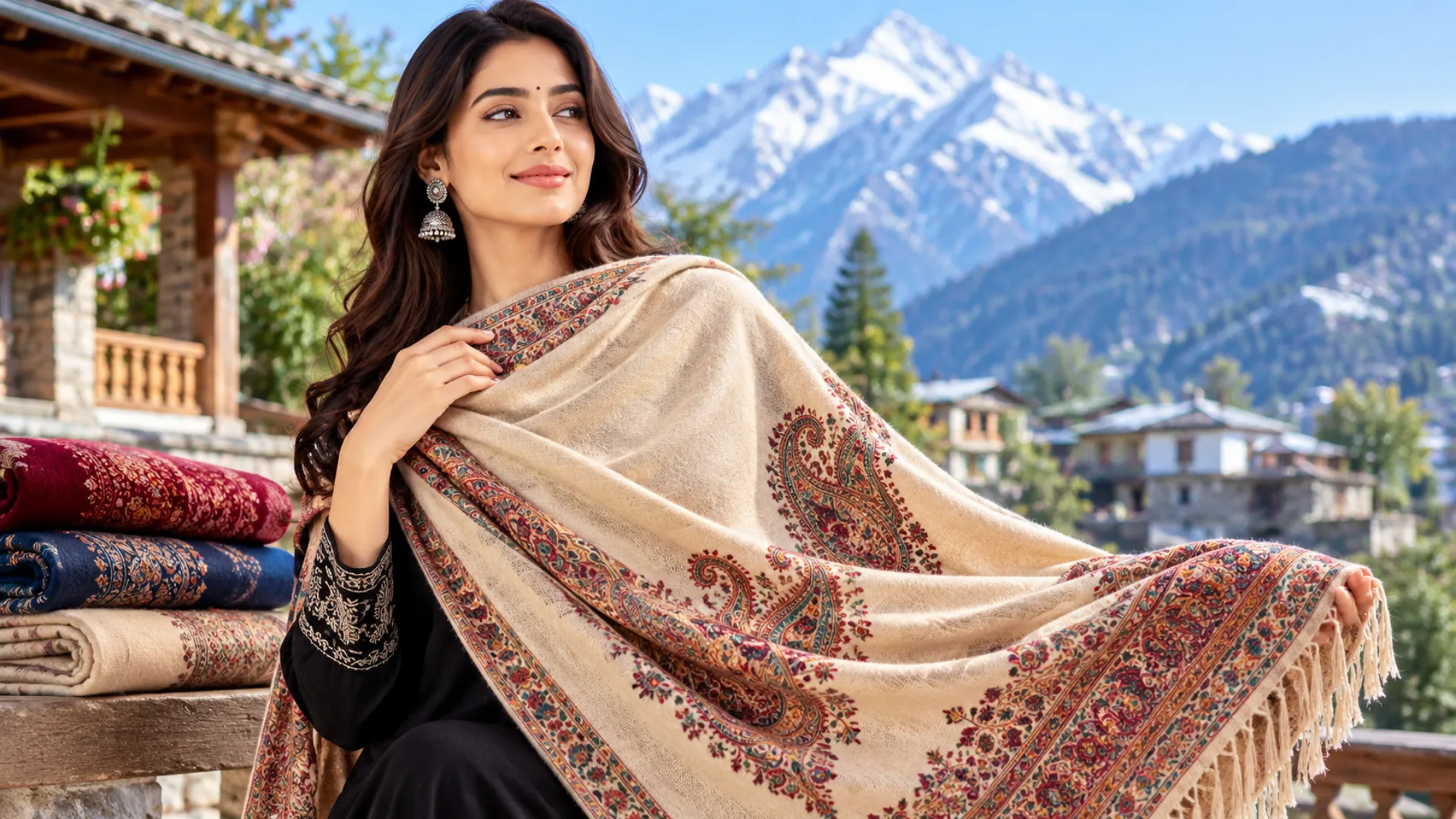
Pure Pashmina Shawl: There are winter accessories that keep you warm, and then there are those that make you feel quietly extraordinary while doing so. A pure pashmina shawl belongs firmly in the second category. Featherlight, impossibly soft, and steeped in centuries of craftsmanship, it turns an ordinary coat into an outfit and a chilly evening into a comfortable one.
In this guide, we answer the questions buyers ask most: what is 100% pashmina, how to identify a pure pashmina, what a real pashmina costs, why pashmina is so costly, and whether you can wash 100% pashmina. If you are ready to browse, you can explore the handwoven shawls and stoles at Crafted Pahad or view the Black Pashmina Shawl with a handcrafted border design.
What Is 100% Pure Pashmina Shawl?
The word “pashmina” comes from the Persian pashm, meaning fine wool. 100% pashmina means the shawl is made entirely from the soft undercoat of the Changthangi goat, which lives on the high plateaus of Ladakh and the wider Himalayan region at altitudes above 14,000 feet. It contains no silk, viscose, acrylic, or nylon blended in.
To survive temperatures far below freezing, these goats grow an extraordinarily fine, insulating inner fleece each winter. In spring it is gently combed by hand, never sheared, and that fiber becomes the raw material for your shawl.
True pashmina fibers measure roughly 12 to 16 microns in diameter. A human hair is about 70 microns thick. This fineness gives the shawl its cloud-like softness and remarkable warmth-to-weight ratio.
How to Identify a Pure Pashmina Shawl
With so many imitations on the market, knowing how to identify a pure pashmina can save you from disappointment. Try these checks:
- Feel: Real pashmina is soft, warm, and slightly airy to the touch. It is never scratchy, and never slippery like synthetic blends.
- Weave and edges: Handwoven pieces show slight irregularities and have hand-twisted fringes. Perfectly uniform machine finishing is a warning sign.
- Rub test: Rub a corner between your palms for a few seconds. Genuine pashmina warms up quickly, while synthetics stay cold or feel static.
- Ring test: A fine shawl can slide through a ring with ease. This is helpful but not conclusive on its own.
- Burn test: Pull out one loose thread (never test the shawl itself). Real wool smells like burnt hair and turns to powdery ash. Synthetics smell like plastic and melt into hard beads.
- GI label and certification: Look for the Geographical Indication (GI) mark for Kashmir Pashmina, along with a seller who offers authenticity documentation.
- Price and transparency: If it seems too cheap to be true, it almost certainly is. Choose sellers who are open about where and how their products are made, like the traceability information at Crafted Pahad.
What Is the Cost of a Pure Pashmina Shawl?
Many buyers ask, “What does a real pashmina cost?” The honest answer is that it depends on the weave, the fiber purity, and the amount of handwork. As a rough guide in India (prices vary by seller and season):
- Plain pure pashmina stole (handspun, handwoven): roughly ₹8,000 to ₹25,000. For example, the Black Pashmina Shawl with a handcrafted border is priced at ₹11,000.
- Dyed or patterned pieces, such as kani or checks: roughly ₹25,000 to ₹60,000
- Hand-embroidered sozni shawls: from ₹50,000 up to several lakhs, depending on how many months of embroidery went into them
- Machine-spun or blended “pashmina”: often ₹1,000 to ₹4,000, but these are usually not pure pashmina at all
Always check current prices with a trusted seller, since fiber costs and demand shift from year to year.
Why Is Pure Pashmina Shawl So Costly?
If you have wondered why pashmina is so costly, the reasons are simple:
- Limited raw material: Each Changthangi goat yields only about 80 to 170 grams of usable pashmina fiber per year. A single shawl needs the fleece of one to three goats.
- Hand-combing, not shearing: The fine undercoat is collected by hand once a year, which is slow and labor-intensive.
- Hand-spinning and handloom weaving: Spinning gossamer-thin yarn and weaving it takes skill that is passed down through generations. One shawl can take days to weeks.
- Intricate embroidery: Sozni and other needlework can take months or even years on a single piece.
- Extreme geography and tradition: Production is limited to a specific Himalayan region, which keeps supply small and quality high.
- Longevity: A well-kept pashmina lasts for decades, which makes the cost per wear very low.
Lightweight Yet Surprisingly Warm
A full-size stole often weighs under 200 grams, light enough to fold into a handbag, yet it traps body heat as effectively as far heavier woolens. The fibers hold tiny pockets of air that insulate without bulk.
This makes it ideal for:
- Layering under or over coats in harsh winters
- Travel, where it doubles as a scarf, wrap, and airplane blanket
- Indoor warmth in air-conditioned offices or cool evening gatherings
- Transitional seasons, when a heavy jacket is too much but a chill remains
If you want more warmth to go with your shawl, pair it with handmade woollens such as scarves, beanies, and ear warmers.

The Art Behind the Weave
Artisans in Kashmir and Nepal hand-spin the fine fibers on traditional wooden spinning wheels, then weave them on handlooms. Many shawls are finished with hand-fringed edges, natural dyeing, or delicate embroidery in paisley, floral, and vine patterns. Because every shawl is handmade, small variations in texture are marks of authenticity, not flaws.
To learn more about the people and craft traditions behind Himalayan products, read the Crafted Pahad story.
Can You Wash a Pure Pashmina Shawl?
Yes, you can wash 100% pashmina, but it needs gentle handling. Many owners prefer dry cleaning, especially for embroidered or dyed pieces, but careful hand washing works well for plain shawls:
- Fill a basin with cool water and add a few drops of mild, wool-safe detergent or baby shampoo.
- Submerge the shawl and swish gently for a few minutes. Do not rub, wring, or twist.
- Rinse in cool water until the soap is gone.
- Press out excess water by rolling the shawl in a clean towel.
- Dry flat in the shade, away from direct sun and heat. Never use a dryer.
Avoid bleach, hot water, and hanging a wet shawl, which can stretch the fibers.
Caring for Your Pure Pashmina Shawl
- Store folded in a breathable cotton bag with cedar or lavender to deter moths.
- Avoid rough jewelry or bag straps that can snag the fibers.
- Light pilling is natural and can be removed carefully by hand.
- Air the shawl out occasionally to keep it fresh.
Styling Your Pashmina Stole
- The classic drape: Let it fall over both shoulders for effortless elegance.
- The loose loop: Fold lengthwise, wrap once around the neck, and leave the ends hanging.
- The wrap: Open it fully and wrap like a cape over evening wear or a saree.
- The knotted scarf: Fold into a narrow band and knot at the front or side.
Neutral shades like ivory, camel, charcoal, and black go with everything, and a classic piece like the black pashmina shawl works with both traditional and western outfits. Burgundy, emerald, and sapphire add a rich winter pop of color.
A Gift That Lasts
A pashmina stole suits weddings, anniversaries, festivals, birthdays, and corporate gifting alike. It is timeless rather than trendy, and the recipient carries a piece of Himalayan heritage. Browse the full hand weave collection for more handcrafted stoles and wraps to gift.
Frequently Asked Questions
How to identify a Pure Pashmina Shawl?
Check the feel, hand-twisted fringes, the rub test, the burn test on a loose thread, and the GI label, and buy from a transparent, trusted seller.
What is the cost of a real pashmina shawl?
Genuine handwoven pieces typically start around ₹8,000 and rise with weave, dye, and embroidery. See a current example, the Black Pashmina Shawl.
What does a real pashmina cost?
Plain stoles sit at the lower end, while hand-embroidered sozni shawls can cost lakhs.
What is 100% pashmina?
A shawl made entirely from Changthangi goat undercoat, with no blended fibers.
Can you wash 100% pashmina?
Yes, gently by hand in cool water with mild detergent, or by dry cleaning. Never wring or machine dry.
Why is pashmina so costly?
Scarce fiber, hand-combing, hand-spinning, handloom weaving, and detailed embroidery all add up to a premium product.
Final Thoughts
A pure pashmina shawl is more than a winter accessory. It is warmth you can barely feel, luxury that does not shout, and craftsmanship you can wear. Now that you know what 100% pashmina is, how to identify it, and why it costs what it does, you can choose with confidence. Ready to find yours? Shop pashmina shawls and handwoven stoles at Crafted Pahad and bring home a piece of Himalayan craftsmanship that will keep you warm for a lifetime