
Black Pashmina Shawl: Benefits, Styling Tips, and Buying Guide


Black Pashmina Shawl: Some accessories come and go with the seasons. The black pashmina shawl is not one of them. Soft enough to feel like a second skin, warm enough for a mountain winter, and neutral enough to go with almost anything, it has earned a permanent place in wardrobes around the world. This guide covers what makes a black pashmina special, why it is worth owning, how to style it, and how to buy a genuine one without being fooled by imitations.
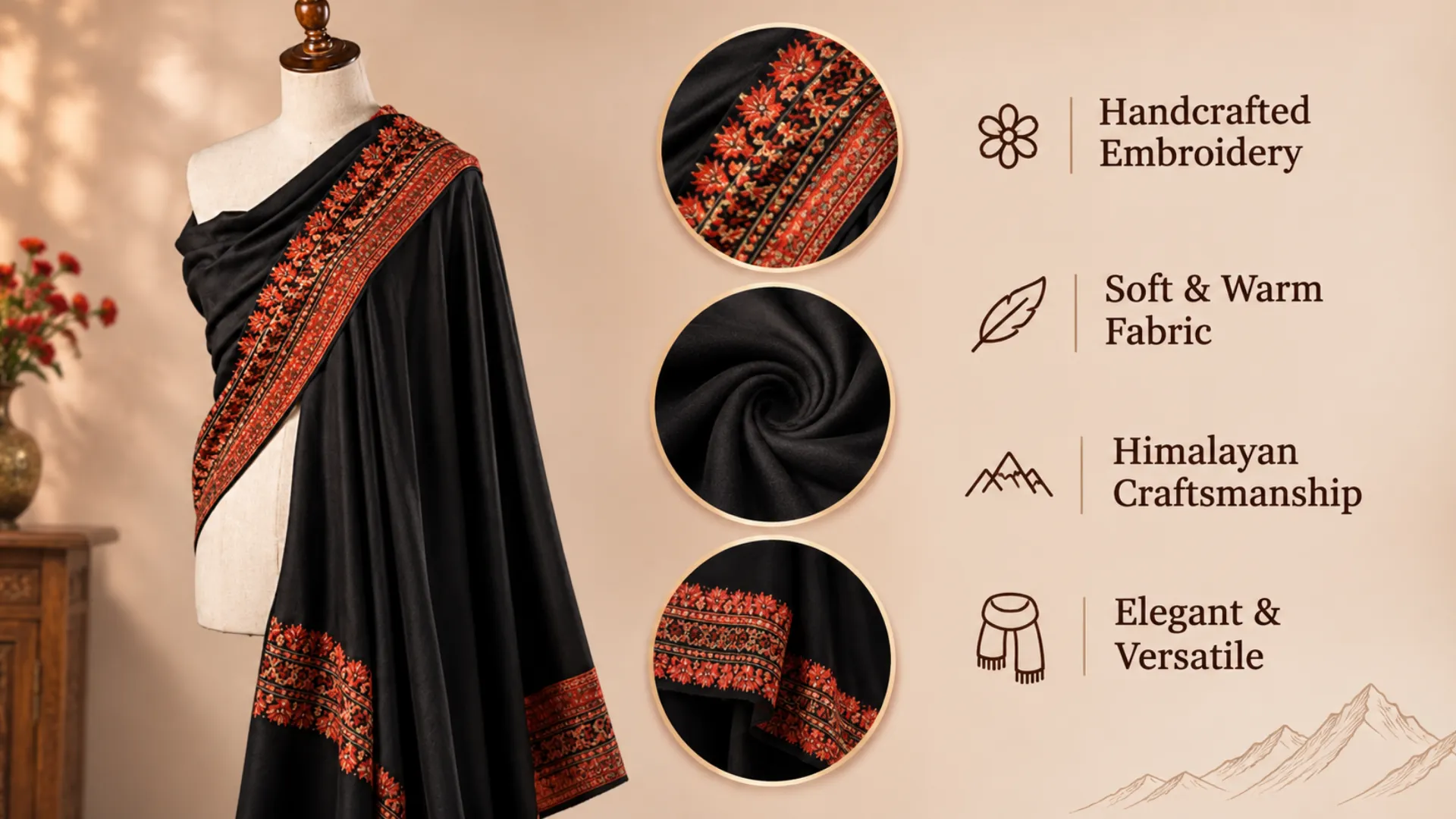
If you are looking for one, Crafted Pahad, a Bhimtal-based brand of Himalayan handmade crafts, offers a Black Pashmina Shawl with a handcrafted border design in its Hand Weave collection.
What Is a Black Pashmina Shawl?
The word “pashmina” comes from the Persian word pashm, meaning fine wool. Genuine pashmina is made from the undercoat of the Changthangi goat, which lives on the high-altitude Changthang plateau of Ladakh and parts of Tibet, where winter temperatures can drop far below freezing. To survive, the goat grows an exceptionally fine, insulating undercoat each winter and sheds it in spring. The fibres are gently combed out by hand, which is why pashmina is sometimes called “diamond fibre” for its rarity.
The fibres are extremely fine, typically around 12 to 16 microns in diameter, much thinner than a human hair and finer than most sheep’s wool. In Kashmir, the raw fibre is traditionally cleaned, hand-spun, and hand-woven on wooden looms, a process that can take days or even weeks for a single shawl. Authentic Kashmir pashmina is also protected by a Geographical Indication (GI) tag in India.
Why Black? The Appeal of the Classic Shade
Pashmina comes in dozens of colours, but black remains the most popular for good reason:
- It goes with everything. Black pairs with denim, formalwear, ethnic wear, and winter coats alike.
- It suits all skin tones and ages. Few colours are as universally flattering.
- It looks luxurious. A deep black pashmina has a soft, subtle sheen that reads as elegant in any setting.
- It is practical. Black hides minor marks better than light shades, which makes it a good everyday choice.
- It is versatile across occasions. The same shawl works at the office, at a wedding, on a flight, or at an evening event.
Benefits of a Black Pashmina Shawl
1. Exceptional Softness
Because the fibres are so fine, pashmina feels smooth and silky against the skin. Unlike coarser wool, it rarely itches, which makes it comfortable even for people with sensitive skin.
2. Warmth Without Weight
Pashmina traps body heat very efficiently. A shawl weighing just a few hundred grams can keep you comfortably warm, and it folds down small enough to carry in a handbag.
3. Breathability and Year-Round Use
The natural fibre breathes well, so it does not leave you feeling stuffy indoors. A lightweight pashmina is also useful in air-conditioned rooms, on planes, or on cool summer evenings.
4. Durability When Cared For
A genuine pashmina can last for decades. Many families pass shawls down as heirlooms, and the fabric often becomes softer with careful use.
5. Versatility
It can be worn as a shawl, scarf, wrap, or even a light blanket, which gives you several accessories in one.
6. A Natural, Artisan-Made Product
Buying a handcrafted pashmina supports traditional artisans and a heritage craft that has been practised for centuries.
How to Style a Black Pashmina Shawl
Classic Drape
Lay the shawl across both shoulders and let the ends fall evenly down the front. This is the simplest and most elegant look, ideal over a dress, kurta, or blouse.
The Wrap
Fold the shawl in half lengthwise, drape it around your shoulders, and cross the ends loosely over your chest. This gives more warmth and works well over a coat in winter.
Scarf Style
Fold the shawl into a long strip and loop it once or twice around your neck. Tuck the ends in or let them hang for a relaxed, everyday look.
One-Shoulder Drape
Throw one end over the opposite shoulder and let it fall behind. This is a graceful option for evening events and weddings.
Belted Look
Wrap the shawl around your shoulders and secure it at the waist with a belt. It turns the shawl into a poncho-style layer, flattering over plain outfits.
Occasion Ideas
- Office: Pair it with a blazer or a crisp shirt for a polished, professional look.
- Casual: Wear it with jeans, a plain tee, and sneakers for effortless style.
- Ethnic wear: A black pashmina works beautifully over a saree, salwar suit, or sherwani, especially with a contrasting embroidered border.
- Evening and weddings: Choose a sheer or lightly embroidered piece and pair with statement jewellery.
- Travel: Use it as a scarf, a light blanket, or a pillow cover on long journeys.
For step-by-step draping ideas, including traditional Indian styles, see Crafted Pahad’s guide on how to wear a pashmina Indian style. If you are shopping for a wedding, its bridal pashmina shawl guide covers choosing a wrap for the big day.
Buying Guide: How to Choose the Right Black Pashmina Shawl
Understand What You Are Buying
The market is full of products labelled “pashmina” that are not. Know the difference:
| Type | What It Is | Typical Feel and Price |
|---|---|---|
| Genuine pashmina | 100% fibre from the Changthangi goat, usually hand-spun and hand-woven | Very soft, light, and high priced |
| Pashmina blend | Pashmina mixed with silk or fine wool, often 70/30 or 50/50 | Soft with a slight sheen, mid-priced |
| Cashmere | Fine wool from other cashmere goats, usually machine-made | Soft and warm, mid to high priced |
| “Pashmina” viscose or acrylic | Synthetic or semi-synthetic fabric sold under the pashmina name | Smooth but not warm, low priced |
Blends are not necessarily bad. Silk blends, for example, are lighter and have a lovely drape. What matters is that the label is honest.
How to Spot a Genuine Pashmina
- Check the label and certification. Look for the GI tag or a Pashmina Testing and Quality Certification Centre mark if you are buying Kashmir pashmina.
- Feel the fabric. Real pashmina feels very soft and slightly warm to the touch, not slippery or plasticky.
- Look at the weave. Handwoven shawls have tiny, slightly irregular textures. Perfectly uniform weaving usually means a machine.
- Check the edges. Hand-finished fringes are usually twisted by hand and neatly done.
- Do the ring test with care. A fine, lightweight genuine pashmina can often be pulled through a ring, but this is not a reliable test on its own, and heavier or embroidered pieces will not pass it even if they are real.
- Be careful with the burn test. Wool burns slowly and smells like burnt hair, while synthetics melt and smell like plastic. Never do this on the shawl you plan to buy, only on a loose thread that the seller has agreed to let you test.
- Consider the price. A genuine handwoven pashmina is expensive. A very low price for a “100% pure pashmina” is a red flag.
For a deeper look at authenticity, read Crafted Pahad’s guides on identifying authentic Kashmiri pashmina and what makes a pure pashmina shawl. Its Our Traceability page also explains how the brand sources its products.
Factors to Consider Before Purchase
- Size: A standard shawl is around 70 x 200 cm. Wider options offer more coverage and styling choices.
- Weave and weight: Plain weave is light and airy, while twill is a little denser and warmer.
- Design: Choose between plain black, tone-on-tone patterns, borders, or embroidery such as Sozni or Kani work, which raise the price considerably.
- Dye quality: Black dye should be even and rich. Ask whether the dye is azo-free and colourfast, since cheaper dyes can fade or bleed.
- Seller reputation: Buy from trusted sellers, government emporiums, or established brands that offer authenticity guarantees and clear return policies.
- Budget: Prices range widely, from affordable blends to very expensive handwoven or hand-embroidered pieces. Decide what you need it for before you shop.
How to Care for Your Black Pashmina Shawl
A little care keeps the shawl soft and deep black for years.
- Wash rarely. Pashmina does not need frequent washing. Air it out after use.
- Dry clean or hand wash gently. Dry cleaning is the safest. If hand washing, use cold water and a mild wool or baby shampoo, and never wring or twist the fabric.
- Dry flat. Lay it on a clean towel away from direct sunlight and heat. Do not hang it wet.
- Store properly. Fold it and keep it in a breathable cotton bag with cedar or lavender to keep moths away. Avoid plastic.
- Avoid friction. Rough zippers, jewellery, and handbag straps can cause pilling or snags.
- Handle pilling gently. If small pills form, remove them by hand or with a soft comb rather than a razor.
Final Thoughts
A black pashmina shawl is one of the rare pieces that is practical, beautiful, and timeless all at once. It keeps you warm, dresses up simple outfits, and, if you choose a genuine one and care for it well, can serve you for a lifetime. Take your time when buying, check the authenticity markers, and choose the quality and style that suit your needs. Do that, and your black pashmina will become the one accessory you reach for again and again.
Ready to explore? View the Black Pashmina Shawl at Crafted Pahad, browse the full Hand Weave collection, or read more on the Crafted Pahad blog.